All is Als with Anna
In conversation with Anna Stereopoulou

PROLOGUE
Is it the sounds that make you wonder? Ιn this interview with Anna, we explored her new work “Als”, the sound of a sea-shell that reminded me of Rohan’s war horns, the meaning of silence, and foxes’ screams in London!
At the age of three she is already asking for a piano. By six, she has begun studying music. One summer evening in Pelion, Anna is now a teenager. It is a sunny evening, and then rain comes. Anna runs inside and tells her mother what she had just witnessed.
“Go on and tell me that story on the piano.” her mother says.
Anna sits on the piano and translates that condition into music. Years later, I meet her in her workspace. The place I enter is absolutely quiet. There is a piano in the room. Looking back, she sees that evening, her first composition “The Rain”, as the moment she discovered her dream.
It was then, at that moment where I played the story of the rain, that I understood what I wanted to do in my life […] writing music for the image. […] And that’s what I eventually studied and specialised in England. The image gave me a more specific path in my life. It gave me my dream, and the fact that I acquired my dream at this age, I consider it very important.
Anna is a composer, pianist and researcher working across sound, performance and moving image.
Ι. Seeing Sound
//When you compose, is the process visual as well as auditory ?
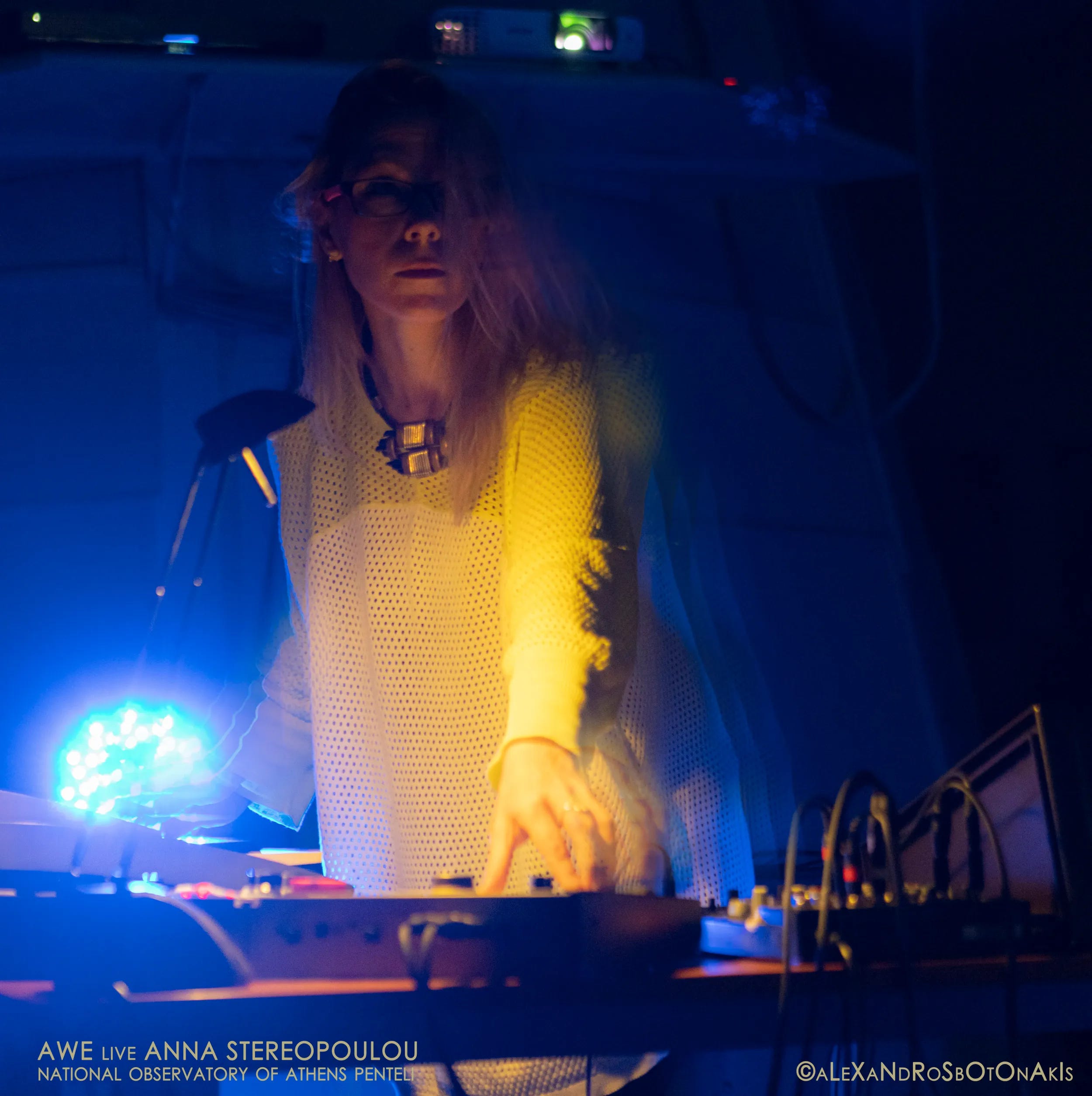
A: When I’m mixing, I feel like I’m a pilot inside a spacecraft moving through space. And as I mix, I’m actually designing constellations and nebulae, and these “non colours” that exist around me, not just in front of me, but in something multi-dimensional.
//Do you allow your audience a sense of freedom?
A: In my live performances, I actually prefer not to provide a fixed visual narrative. […] If I use light, I use light and colour in a more abstract way. Something ambiguous, almost dreamlike. The idea is to guide the audience, or even, in a sense, to gently manipulate emotion, but not in a fully controlled way. Ι don’t want to impose my own emotional origin completely. The feeling behind a composition might come from something very personal, even sad or very joyful, but what I end up creating can transform that source entirely.
And I think it’s important that the audience receives that transformation in their own way, not as a direct translation of what I felt.
//If silence interrupted your music, what would it say?
Nothing, she says. We laugh. We are interrupted by steps from the empty apartment above. Quick little steps disappearing into the rest of our silence. Have we witnessed the paranormal, she rationalises it; new tenants in the building. Anna’s not scared.
I insist on silence and fear and I ask her what does she think silence is before the first sound.
A: The flow of your blood. The heartbeat.
II. The Inner Landscape
Greek and world myth-history remain a constant source of her inspiration. […] Water is also a recurring motif. Even when she tries to move away from certain ideas, she returns to water and dream states.
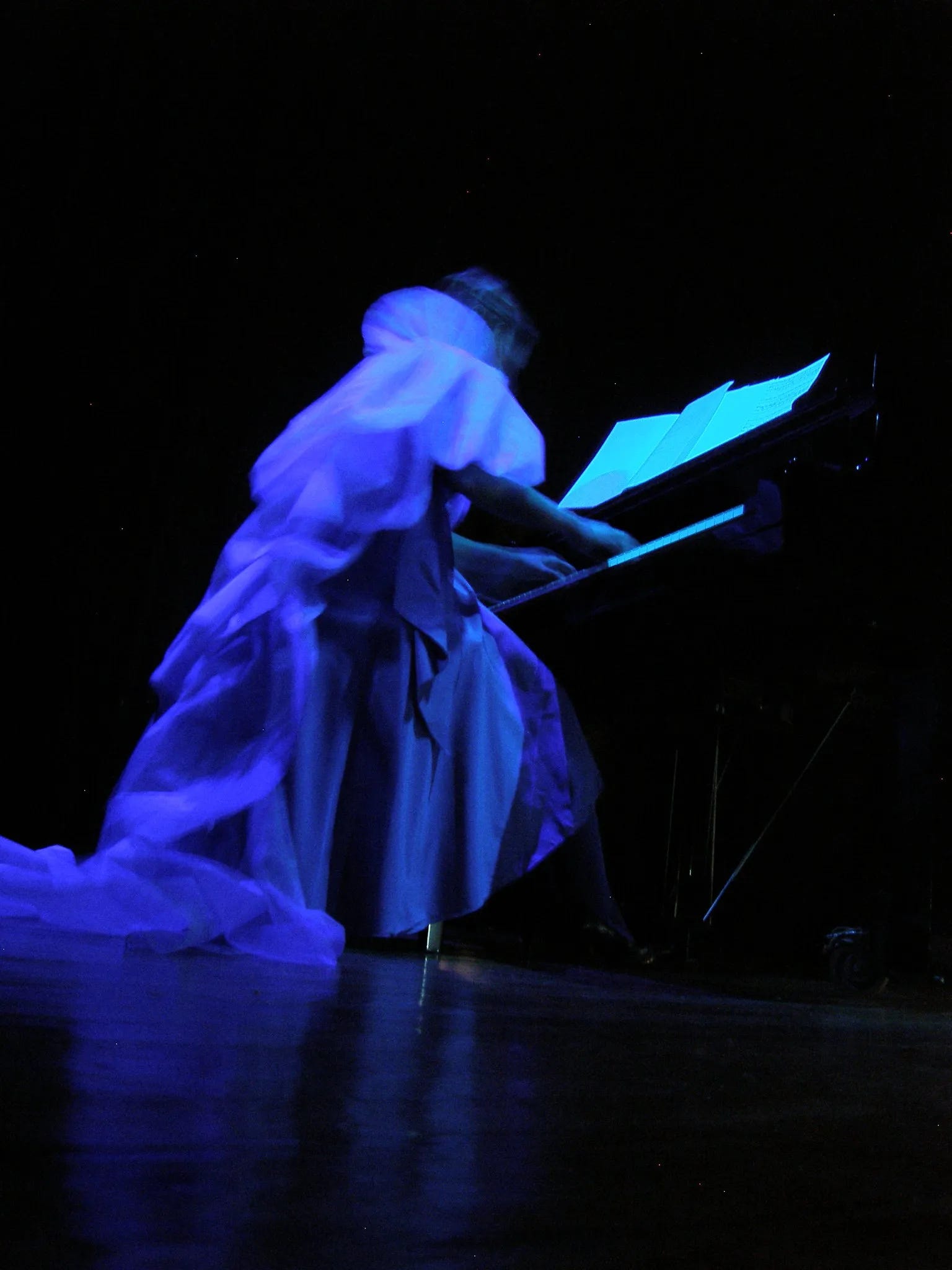
Tell me about a sound that unsettles you, I ask her. The sound of foxes, screaming in London’s night streets. She attributes it to the frequency, how it can create a sense of unease to the body.
A: The human ear only perceives a certain range of the sound spectrum, and when you’re exposed to something very high or very low, it affects you physically, it unsettles the body.
// Is there a sound that keeps returning throughout your work?
Anna brings me a shell, a nautilus.
A: It’s the sound of a seashell. I first used it in oneirograph, and later I realised I had placed it elsewhere too. At one point I started to feel like I was repeating myself, and almost that I was deceiving the audience, but in reality I was deceiving myself, because I don’t like repetition. Eventually I let go of that feeling completely. I stopped seeing it as something negative and began to embrace it.
I realised it might actually be my sound signature, my sonic identity.
III. Als
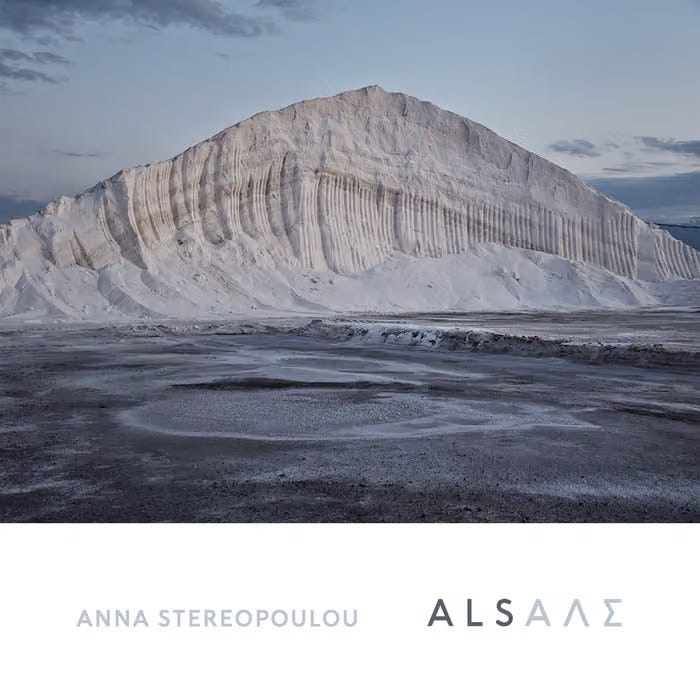
ἅλς (ἡ, ὁ) from ancient Greek (háls)
Noun fem.: SEA; masc.: lumps of SALT (NaCl)
//Ιf Als started with an image, what would that image be?
A: I think it would begin with the deck of a ship, with the wind moving through it, and the very front of the vessel, the figurehead (Akroproron) cutting through the air. It’s that moment that always draws me in when I’m on a boat […]when I find myself looking down at the sea below. It’s as if it calls me, pulls me towards it.
//What was the first element that was born in Als?
A: There was already this presence of the sea, of travel, of salt. But more specifically, it was the sensation of it; the taste of seawater in your mouth when you dive in, or the salt in the air that sticks to your skin. That feeling of journey. […] Als, this new work, also carries its own storms within it.
//Is there a moment in the work that you consider its heart?
A: I would mention two pieces that immediately come to mind. The first is Myron, which I hold very close. I’ve grown to love it deeply, it feels very personal to me. The second is Helleborus. […] Structurally, the album follows a kind of golden ratio, and Helleborus sits at that point of deepest intensity. It’s the moment where everything seems to reach its lowest depth, but also where resolution begins to emerge.
Als has always been about a journey. It is the sea, the wave of the Mediterranean she was born and raised in, “the continuity, the repetition, the movement” she says. From this point onwards, she believes Als begins its own journey. It starts to exist on its own terms, and in a way, it begins to teach her.
IV. The Craft
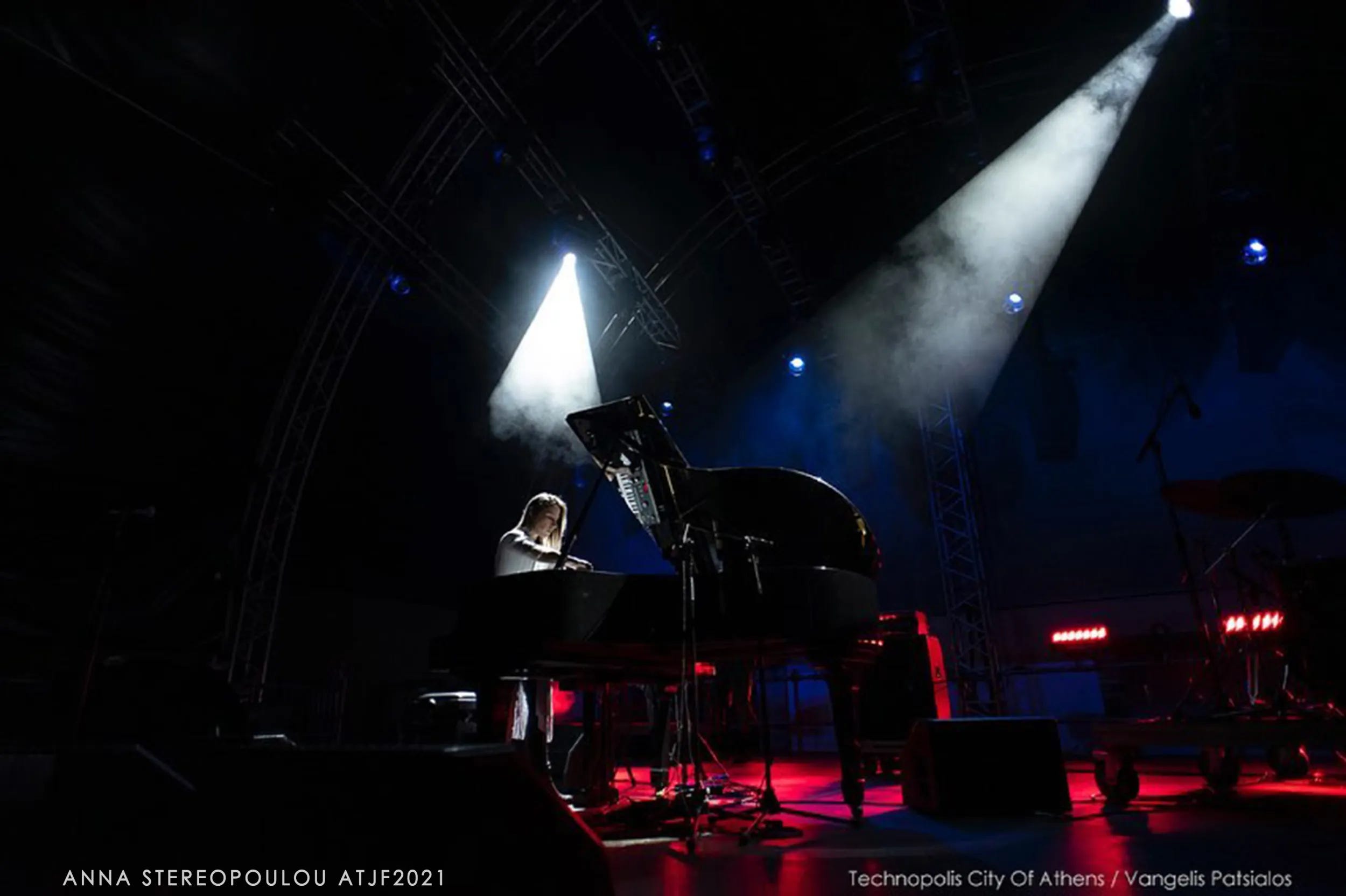
The piano is my native language of communication.
//Do you remember something that may not have been in the plan of your composition, but ultimately turned out to be very nice as a result?
A: Of course. I think it applies on a large scale, for my entire life. […] There is always a route inside me, a theme. As I create and collect the material, this same thing then begins to show me the form that I will design. From there on, I cannot confine it, because there will be no freedom of expression. […] I like to create such a thing as an enclosure, a self-enclosure, so that I can then break it. That’s why I also like the mistakes.
I was lucky enough to study classical music and learn all these rules, studying them, helped me want to and be able to break them later.
V. Art Against the Current
//What would the world be like without music? Are we anywhere near that point?
A: For me, music is also this conversation we are having right now. Music is the sound of the wind on a beach in Finikies in Amorgos. It is a mother’s voice. It is even the breath you just took. Music has always existed and will continue to exist after us. We are simply part of it.
However, what I feel that has gradually been lost, is melody.
Of course, this is also about what reaches us. There are still people writing melodies, but the question is whether that work actually reaches listeners. And often, what determines that, is not artistic value, but whether it is considered commercially viable. Ultimately, the question is whether we are making music, or making commerce.
VI. Epilogue
//Do you have any advice for the future generation of Greek composers?
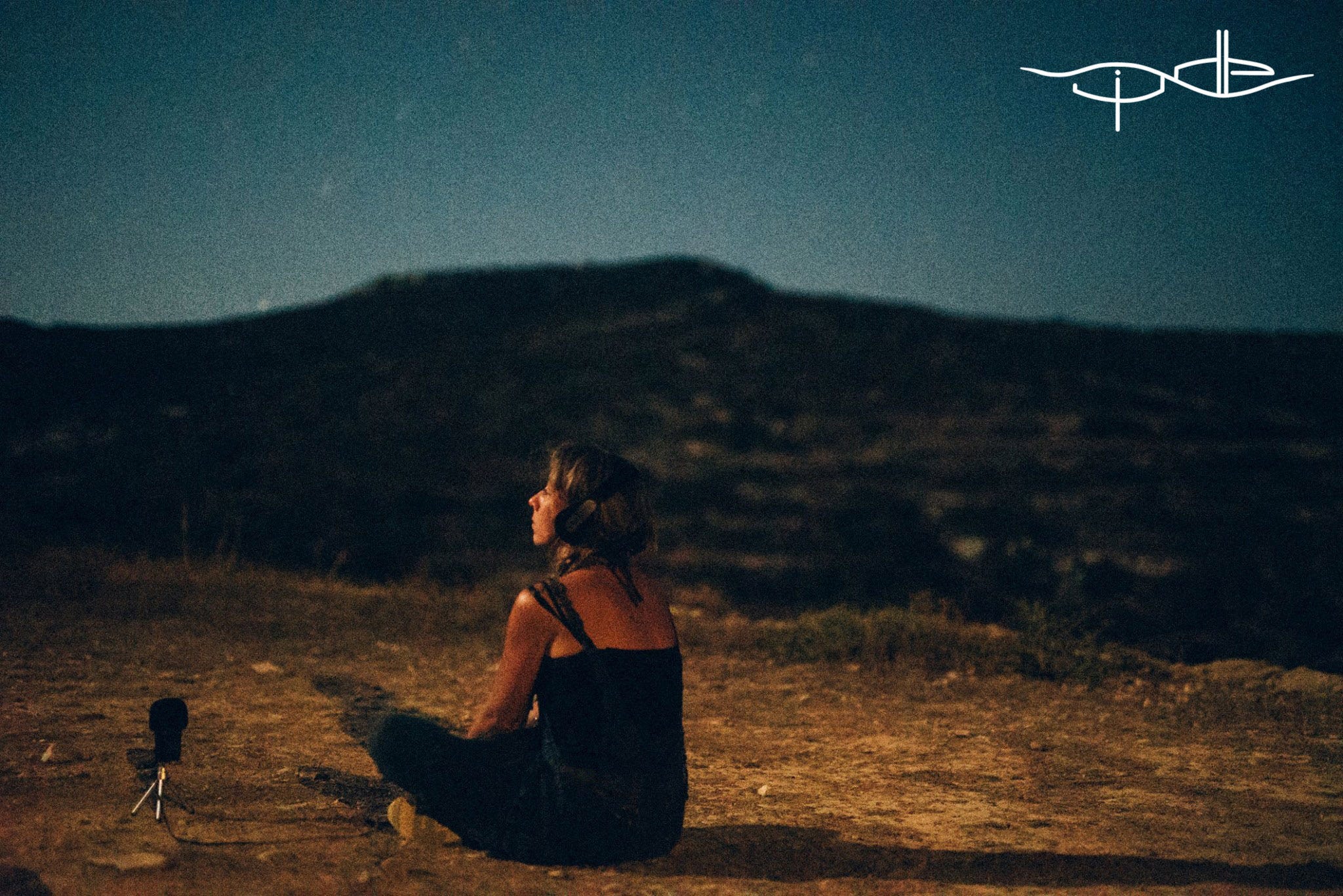
A: I would suggest that we place more value on not forgetting nature. Because that, I think, is where emotion is found. Nature helps us reconnect with it, with our feelings and our senses.
The first live performance for Als will take place on the 25th of July, at the Byzantine Castle of Ancient Pydna (Pieria) in the Photo-grafes / «Words of the Sea» event, as part of the 10th Pydna Festival.
The Green Room would like to thank Anna Stereopoulou for the conversation and wish her every success with the release of Als.
Find and read more about Anna and her work:
https://annastereoscopic.wordpress.com/
Until we meet again in the Green Room: